
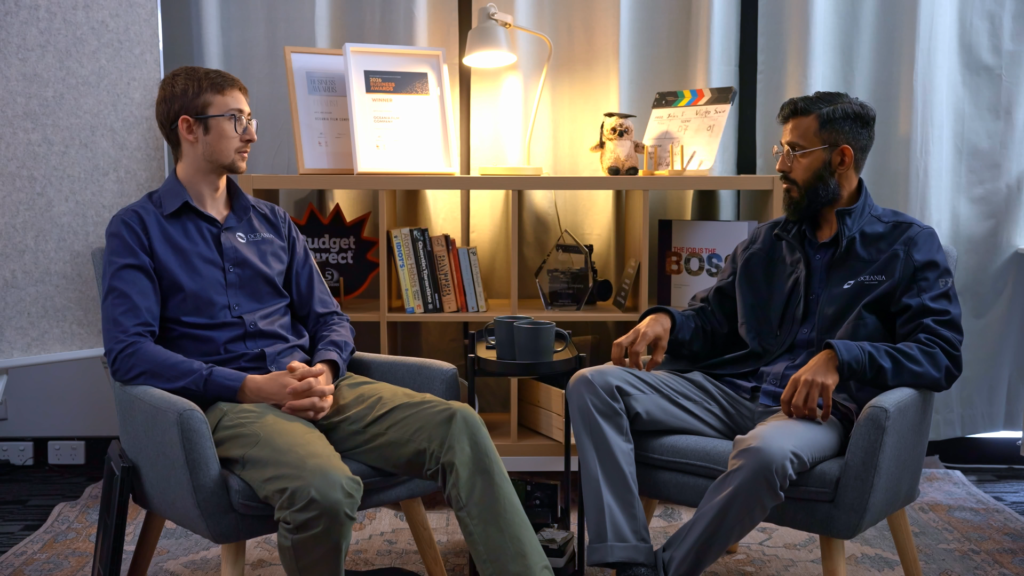
Once a month, a business owner walks into a house in Perth. They sit across from coach Paul Claessen and ask the questions that help video grow business. Additionally, no script, no second take, no do-overs. Whatever happens in that conversation is what gets posted.
Video grows a business. You’ll notice it looks nothing like an ad.
So how do our clients actually use video? As a sales tool, a recruitment tool, a training resource, and a brand story. In Paul’s case, a library of thinking that grows a little bigger each month. Additionally, stay with us for a few minutes. We’ll introduce you to five of them properly. Then finish with the ideas worth borrowing for your own business.
How do our clients use video to grow their business?
A library, not a video
Paul is a business coach, and what he sells is the way he thinks on his feet. Which was exactly the problem. Have you ever tried to describe someone who is brilliant in the moment? A scripted talking-head video can tell you Paul is good. It cannot show you.
So we didn’t design a film for him. We designed a format. A real business owner brings real questions, Paul answers them live on camera, and the conversation itself is what gets published. Nobody performs, because there is nothing to perform.
To make it repeatable, we built a permanent set inside Paul’s home. Same room, same lighting, same crew every shoot.
Because nothing has to be reinvented, the series simply runs. Months in, Method & Mastery films monthly, and every session adds to a long-term library of business insights Paul will still be drawing on years from now.
One video ages. A library compounds.
One film, three jobs
Legacy Modular builds modular homes, and here is their quiet difficulty: modular building is new enough that most buyers have never once watched one go up. Never seen the very thing they’re being asked to buy. That gap fills itself with questions. How does the process work? How long does it take? What are the trade-offs?
We spent two days on an active site and filmed a house rising from slab to roof. Assembly, trade rotations, deliveries, the crane, even the weather, which never once consulted the run sheet.
The finished film does three jobs at once. It shows what Legacy does, it explains why their method is different, and it makes the case for modular building itself. Project showcase, brand story, sales asset. One film.
Now, when a buyer asks how it all actually works, the answer is a link.
One shoot, a whole shelf of assets
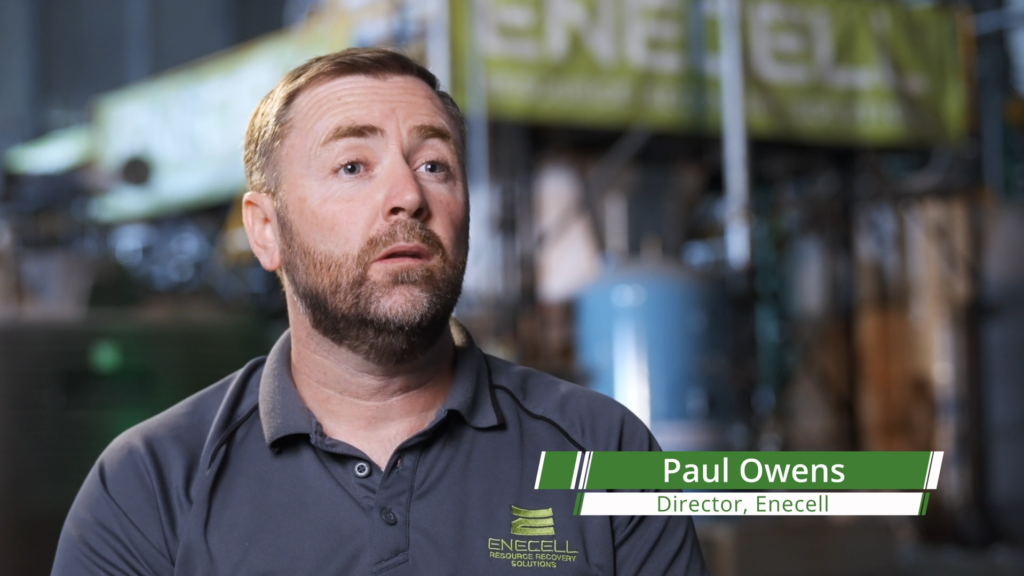
Enecell is a Perth battery recycling company turning hazardous battery waste into commodities for renewable manufacturing. Their challenge isn’t engineering: it’s awareness. Most businesses have no idea an eco-safe local solution even exists.
And the process is technical, hazardous and tightly regulated, which makes it hard to explain and easy to doubt. So rather than have anyone talk about safety systems, we filmed the safety systems doing their job. Watching a thing work beats being assured that it does.
Two days on site gave us interviews with the founder, the operations manager and their environmental consultant, plus aerial footage, headshots, and the complete recycling process documented end to end.
From that one shoot came a suite of films: a corporate video, a safety walkthrough, a client testimonial and a social trailer. Between them they handle awareness for people who’ve never heard of Enecell, sales for the people who have, and training for the team inside.
Point the camera away from yourself
Now for our favorite kind of confidence. Toby’s Estate is one of Australia’s most recognized specialty coffee brands, and they made a project about everyone except themselves.
They ran a national search for the best cafe stories among the venues actually pouring their coffee, not the roaster sending it out. Two Perth cafes made the cut, Finlay & Sons and Orion, and we captured them both as short brand films about people rather than product.
Here’s the part nobody tells you about brand films: the warmest ones are rarely about the brand. Toby’s celebrated their customers, and their customers’ loyalty does the talking from there.
Video that changes who walks through the door
Then there’s the work that stays with you long after pack down.
Hanssen is one of WA’s largest high-rise builders and one of the state’s most active employers of ex-prisoners. In partnership with Thrive Integration, a Perth charity founded by former WA detective Chris Bown, around 90 of Hanssen’s current workforce came through that pathway. For many of them, it’s their first job since release.
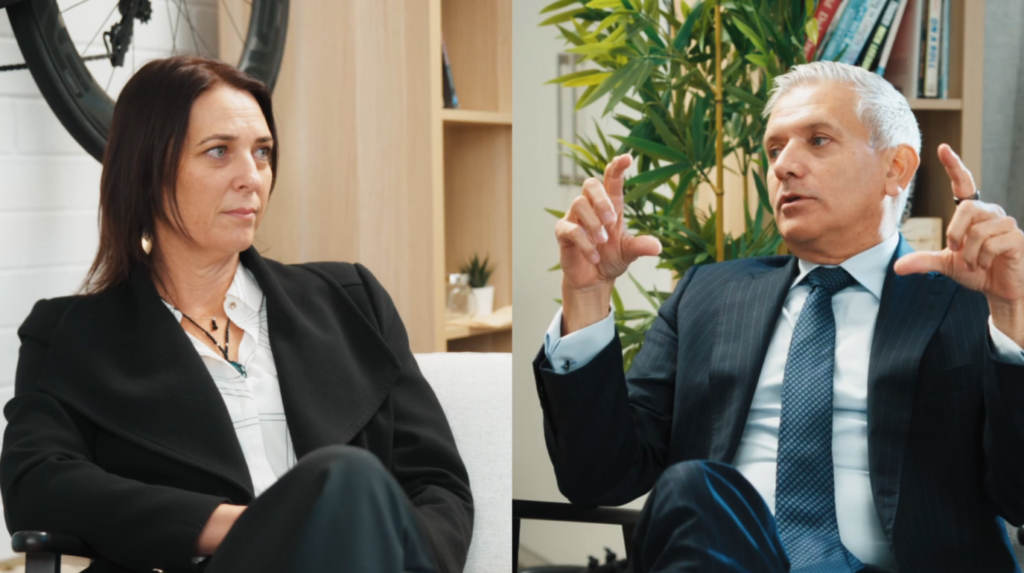
Alongside a site tour, we filmed The Round Table: five people who had experienced the prison system, Thrive’s leaders and Hanssen’s leadership, all in one honest conversation. We didn’t direct a word of it. Our whole job was to make the room calm and unobtrusive enough that people felt safe to speak, and then to stay out of the way.
What came out of that room carried emotion, vulnerability and hope, and it works hard every single day. It tells a candidate rebuilding their life that this is a place that will give them a real chance, and it shows partners and the public what Hanssen actually stands for.
Recruitment, reputation and purpose, from one honest hour of people talking to each other.
What you could copy tomorrow
You probably don’t need a crane or a round table. You knew that. But every one of these ideas scales down beautifully, so let’s go shopping.
Borrow Paul’s rhythm: stop commissioning one-off videos and start a format you can film again and again. Borrow Legacy’s honesty: film the process your customers have never seen, because their unanswered questions are your sales objections wearing a different hat. Borrow Enecell’s arithmetic: plan one shoot to produce many assets, never just one. Borrow Toby’s restraint: make your customer the hero. And borrow Hanssen’s nerve: let real people speak without a script, because that’s the version audiences believe.
Did you notice what none of these five did? Not one of them set out to “make a video”. Each arrived with a business problem: show coaching in action, explain a new building method, build awareness for an invisible solution, celebrate customers, open doors for people who badly needed one opened. The film was simply the tool that solved it.
That’s the whole trick, and we’ve seen it a hundred times. Decide the job first, then make the film to do it. Video didn’t grow these businesses because it looked good, though it did. It grew them because every film turns up each morning with a job to do, and does it without being asked twice.
If you’d like to think out loud about what that job might be in your business, we’re easy to find, and we’ll put the kettle on.
FAQ
Is a big budget needed to use video this way?
No, you need a clear job for the video before you brief anyone, and that part costs nothing but thought. A modest film with a defined purpose will quietly outwork an expensive one made “for the website”.
What’s the best first video for a small business?
Usually the one that answers the question your customers ask most often, because it saves you repeating yourself and builds trust before the first meeting. Legacy’s film earns its keep by answering “how does a modular home actually go up?”
How do businesses get so many assets from one shoot?
By planning it before filming starts, with interviews and coverage captured for several end products at once. Enecell’s two days on site became a corporate film, a safety walkthrough, a testimonial and a social trailer.
Does unscripted really work for business video?
Yes, provided the format is built around real questions and the person genuinely knows their subject. Paul’s series and Hanssen’s round table are both unscripted, and that’s exactly why people believe them.
